

Latest Update April 02nd 2026:
The Project At Isaacson Primary School Has Begun
The Siya 3 Stages Of Aid Happening Now!
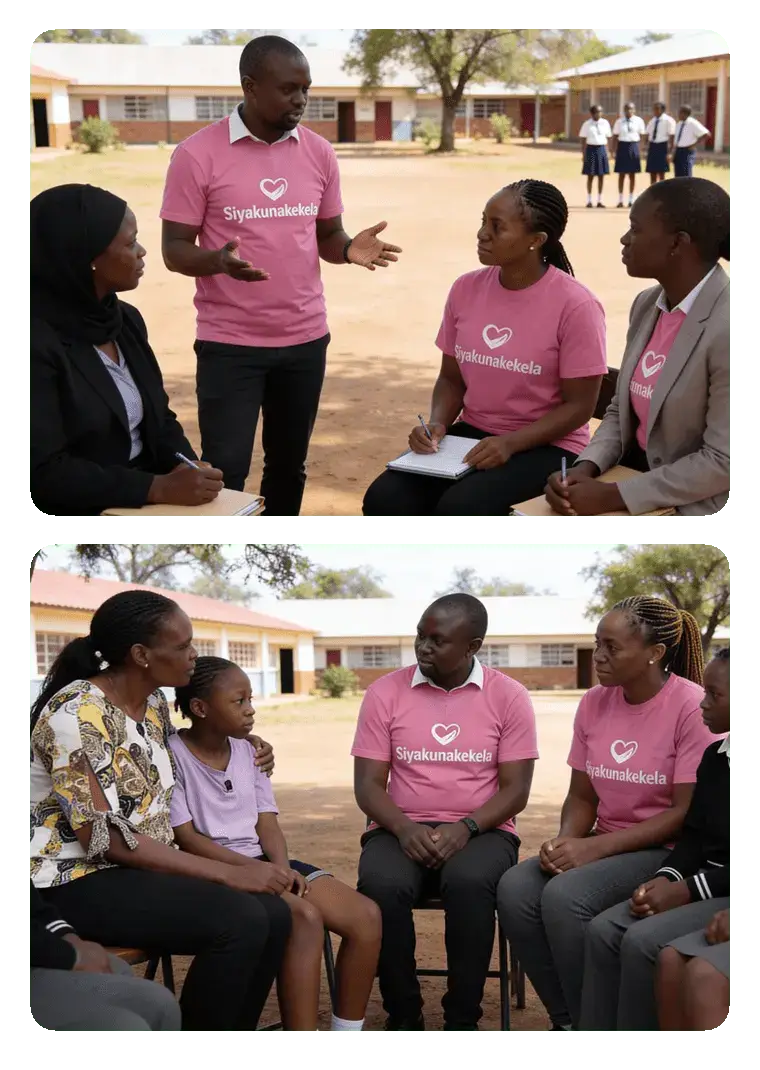
Stage 1: Our team hits ground at Isaacson Primary in Soweto, meeting with teachers and parents. The aim is to identify the girls who need support most, documenting exactly what they need. This groundwork ensures every pad we produce reaches a girl who truly needs it.
Stage 2: Production begins for Isaacson Primary. Our team will manufacture 100% biodegradable pads locally in South Africa, enough for all 36 girls. Each pad will be hand-checked. Supply packs will be assembled specifically for Lesego and her classmates. Box by box, hope becomes real
Stage 3:The pads for Isaacson Primary will be packed, sealed, and labelled. The delivery route to Soweto will be planned. Lesego and her 35 classmates will be waiting at the school gates, ready to receive what they need. The moment these girls have been waiting for will finally arrive straight to their hands.
Every step forward brings us closer to the moment we can deliver the pads to Lesego & the other girls and get them back in school full time.
“We’re so grateful to those that have signed their names and blessed us with initial funding to start getting this project underway. The fact you care means so much to everyone.”
Mrs Moamogoa, Lesego’s Mother
Isaacson Primary School
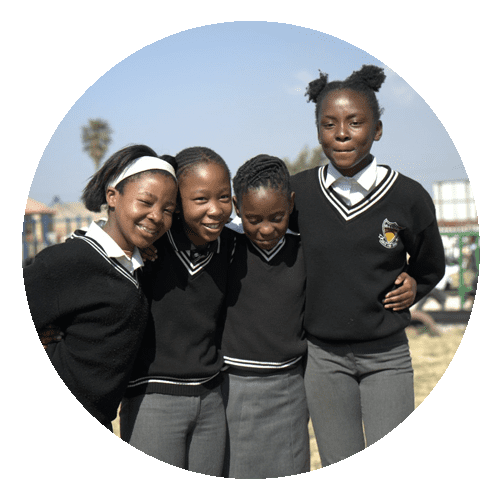
Help us reach our goal and deliver the pads the girls at Isaacson Primary School desperately need.
Her Teacher Knows Something Is Wrong
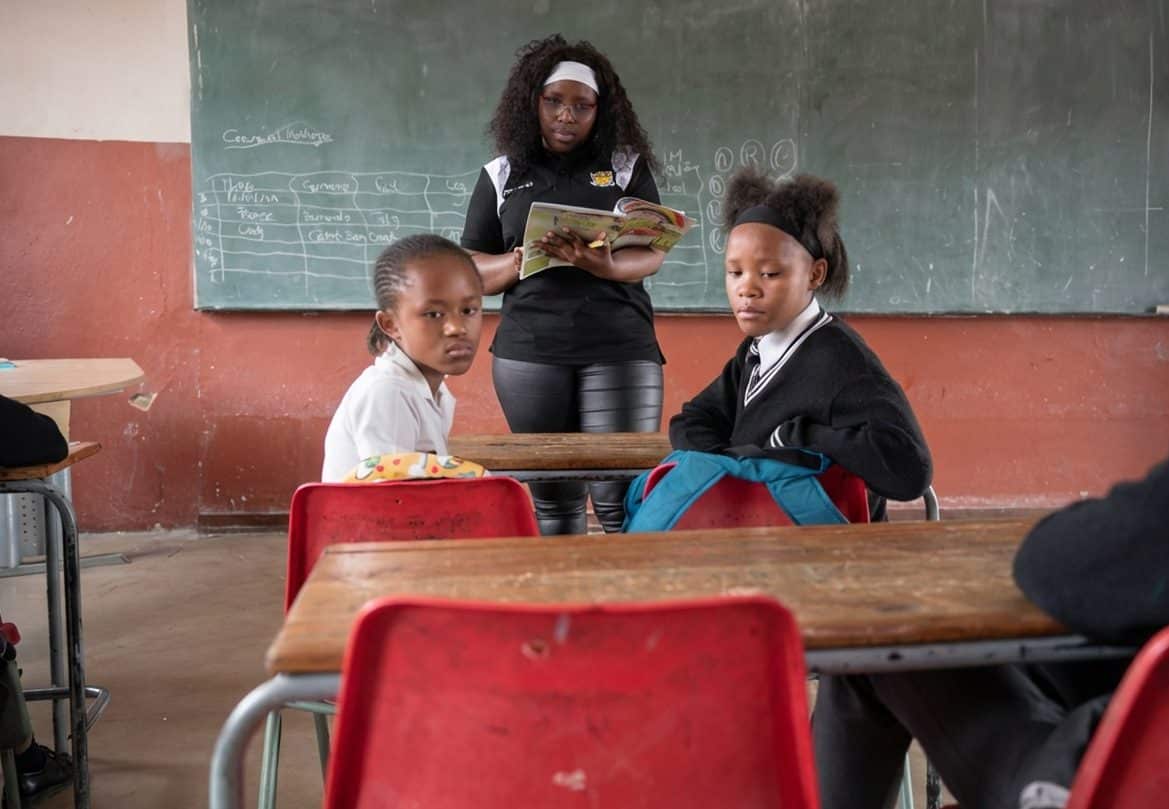
Every month, MS Motloali marks the register at Isaacson Primary. And every month, she pauses at the same name.
Lesego’s desk sits empty. Her classmates move forward without her. The lessons continue, but she’s not there to hear them. Four days. Sometimes five. Then she returns, trying to catch up on everything she missed.
This is the pattern. Absence. Silence. Falling behind. And it repeats, month after month.
She Watches the Others Walk Past
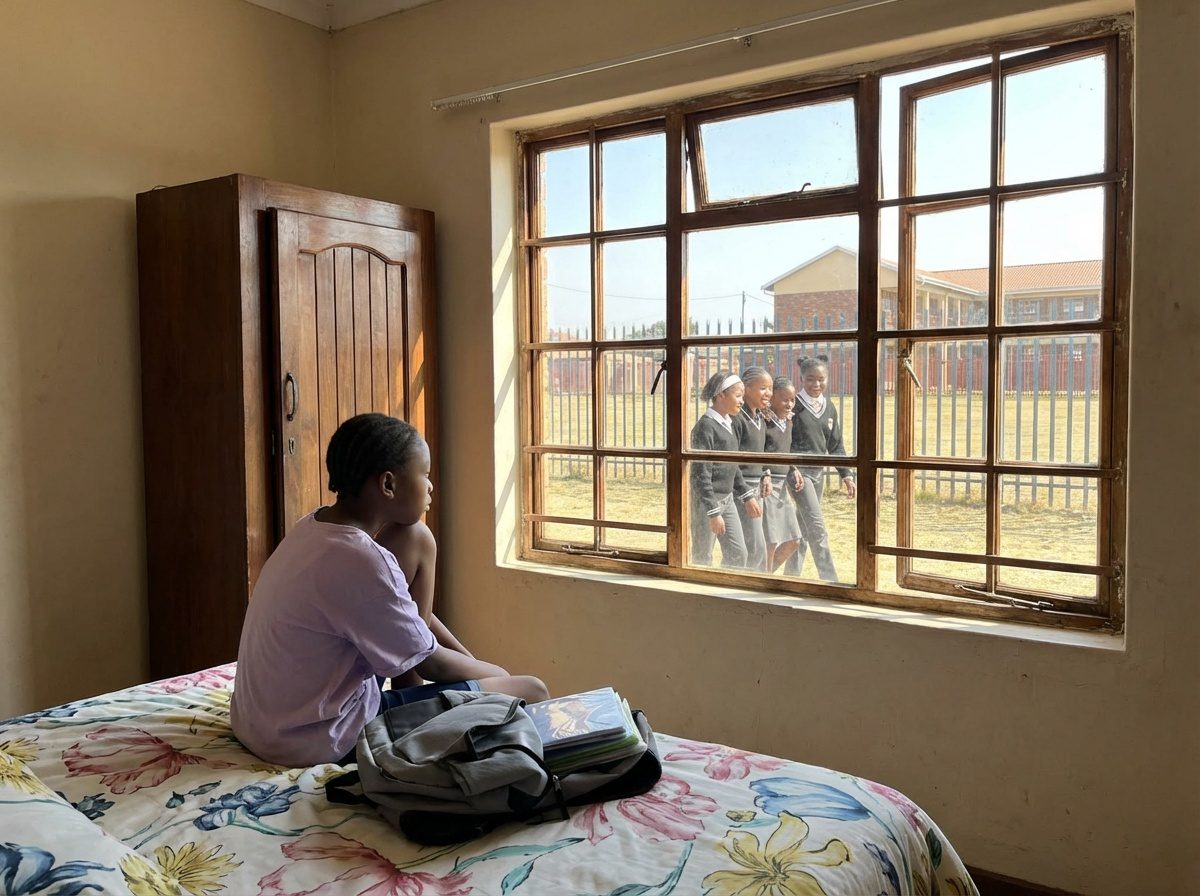
When Lesego can’t go to school, she stays home. She doesn’t talk about why. She folds her uniform and puts it away.
She watches the other children walk past her window on their way to class.
She waits for the days to pass. For the shame to fade. For her body to let her be a student again.
“When I can’t go to school, I try not to think about what I’m missing. But I hear the other children outside. I see them walking past. And I wonder if anyone notices I’m not there.”
Lesego, 12, Isaacson Primary
WHAT HER MOTHER CANNOT PROVIDE ALONE
Didimalang watches her daughter struggle with something no child should face alone.
She sees the shame Lesego carries. The days lost. The opportunities slipping away.
She wrote to us asking if anyone could help. Not for charity. For dignity. For the chance to let her daughter be a normal girl who goes to school like everyone else.
“You do everything you can for your child. You find a way. But this? I cannot fix this for her. I watch her stay home and I feel like I have failed her. All I want is for someone to help me give her what I cannot.”
Mrs Moamogoa, Lesego’s Mother
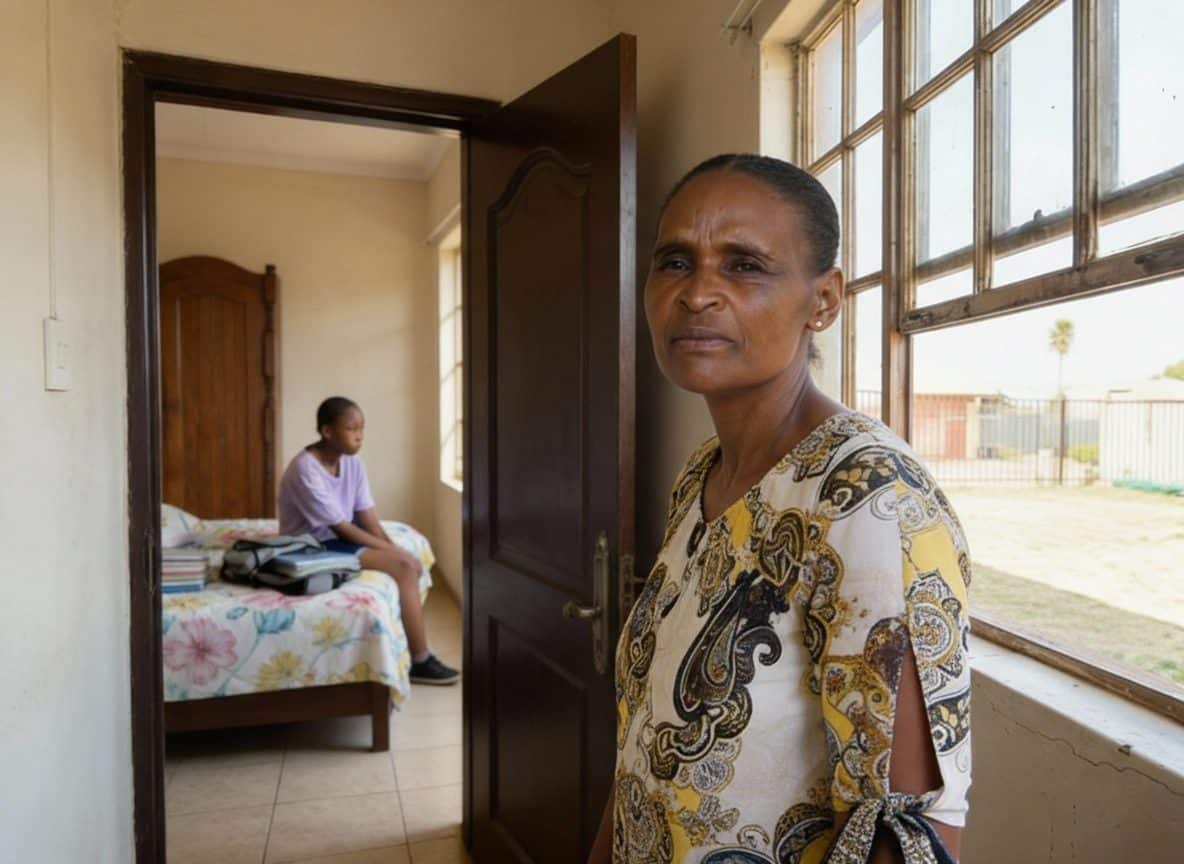
The Siya Stages Of Support
Our relentless mission is to get the sanitary pads these girls need delivered and distributed directly at Isaacson Primary school
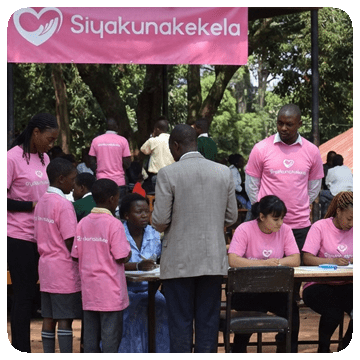
Stage 1: Planning
Our team is on the ground at Isaacson Primary in Soweto, meeting with teachers and parents. We are identifying the girls who need support most, including Lesego, and documenting exactly what they need. This groundwork ensures every pad we produce reaches a girl who truly needs it. The plan is taking shape.
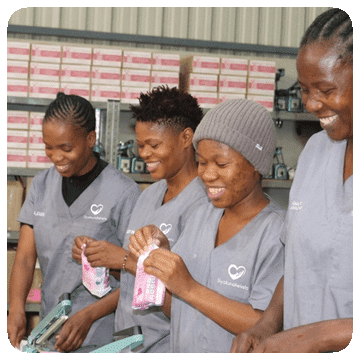
Stage 2: Manufacturing
Once the plan is confirmed, production begins for Isaacson Primary. Our team will manufacture 100% biodegradable pads locally in South Africa, enough for all 36 girls. Each pad will be hand-checked. Supply packs will be assembled specifically for Lesego and her classmates. Box by box, hope becomes real
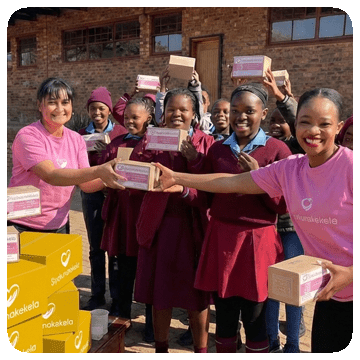
Stage 3: Delivery
The pads for Isaacson Primary will be packed, sealed, and labelled. The delivery route to Soweto will be planned. Lesego and her 35 classmates will be waiting at the school gates, ready to receive what they need. The moment these girls have been waiting for will finally arrive straight to their hands.
6,720 days of education saved
Take a trip to Soweto, Johannesburg, and you’ll find happy children playing, learning, and – most importantly – thriving at Emisebeni Junior Primary School.
The school came to our attention during our national outreach program as one in desperate need. We discovered that many of the pupils at Emisebeni come from disadvantaged backgrounds, and we felt duty-bound to help them escape period poverty.
The school provides a safe and welcoming environment for a total of 298 children, 112 of whom needed our support with their menstruation and sanitary needs.
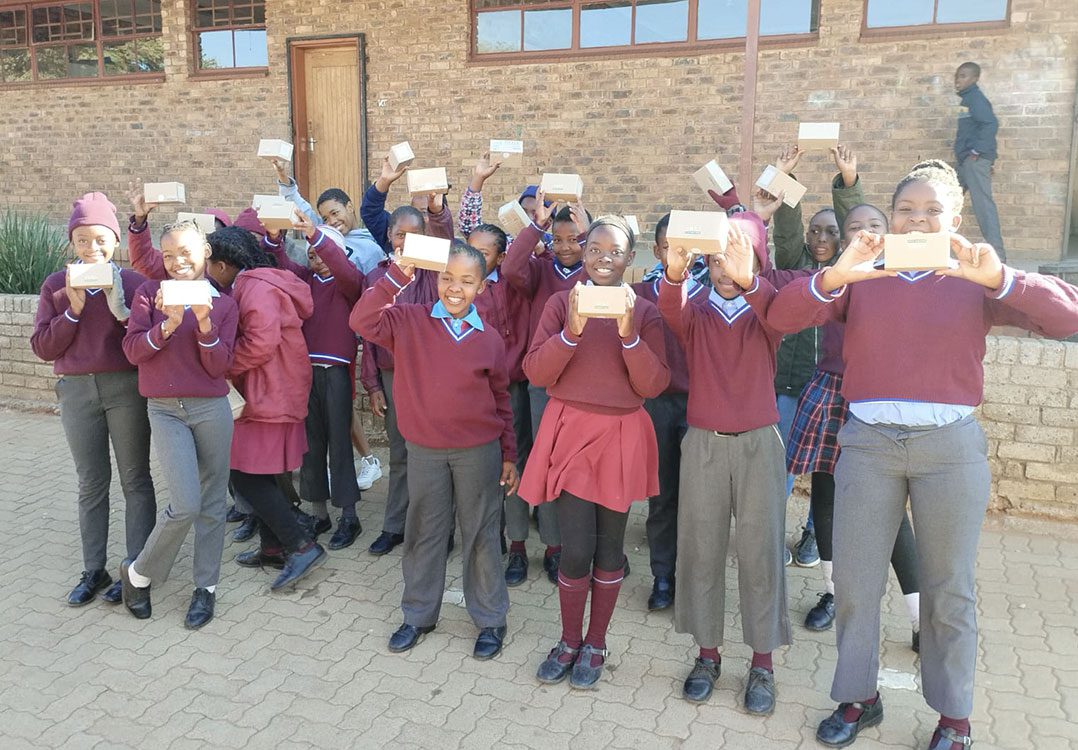
Many people are aware of the lack of funds for sanitary products, making life even more difficult for South Africa’s young women. But what they often fail to realise is the impact on education.
Every young woman who experiences period poverty in South Africa misses a minimum of 60 days of learning each year. Multiply this by 7 million, and the scale of the problem is hard to comprehend. Period poverty doesn’t just hold back one individual from achieving great things in life—it holds back an entire nation from reaching its full potential.
We ensure that our 100% biodegradable sanitary products are delivered directly to those in need. And it’s our dedicated team of local drivers that makes sure this happens, making us immensely proud to support the local economy by providing paid employment, too.
If the thought of a young woman losing her education due to a perfectly natural, monthly occurrence fills you with a sense of injustice, please consider supporting us with a donation. Just £1 per month can lift a young woman out of period poverty for the rest of her life.
A little glamour greatly helps the cause
Moroka, Johannesburg, is where 1,245 children attend Noordgesig Secondary School. It was brought to our attention through our outreach program back in 2022. Sadly, they face many of the same social challenges that most of our schools endure—period poverty being among the most serious.
That’s why we jumped at the chance to highlight the period poverty they were facing. We used this opportunity to cultivate further awareness of our cause and to help even more young women across Soweto ease the burden of dealing with their monthly cycle.
Carla Niemand, a semi-finalist in Mrs South Africa 2022, helped tremendously by bringing her warm nature, glamour appeal, and passion for helping young people.
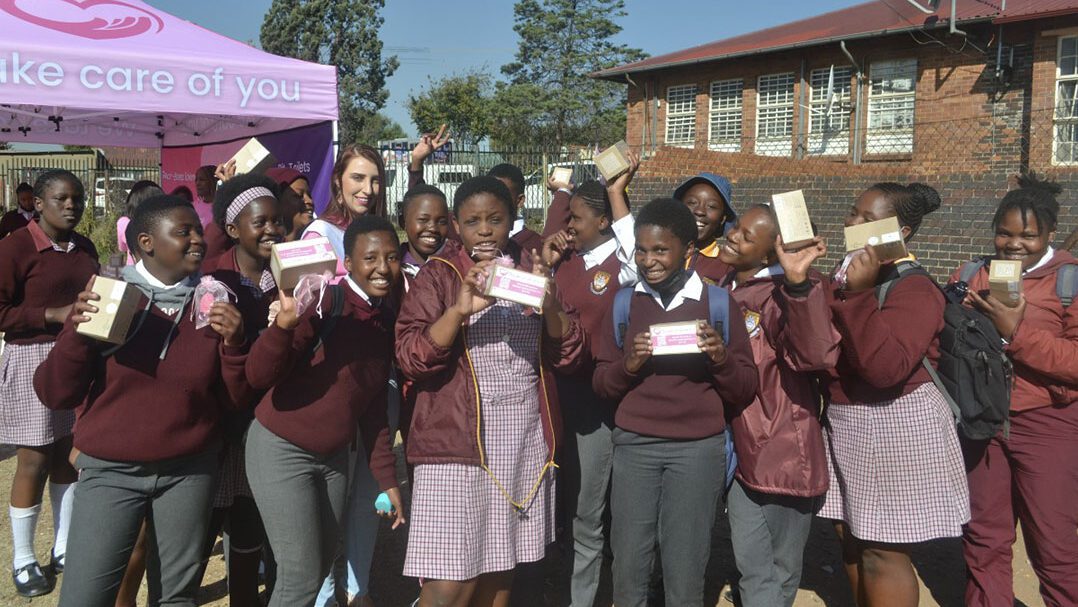
Her involvement included joining us for a sanitary pad donation drive at the school, encouraging the girls to grow into confident, independent women and highlighting the importance of dignity in menstruation.
What made the whole campaign even more effective was the SABC Fullview Period Poverty campaign, broadcast from Noordgesig Secondary School in June 2022 with Siyakunakekela. It focused on the importance of dignity in menstruation, the impact of community and family on young girls, and the role of government and the private sector in addressing period poverty.
This was a very proud moment for us; we’ve already yielded many benefits—more awareness, more donations, and greater recognition of the essential work we do at Siyakunakekela.
We would love you to get on board with our work. Our mission has always been to eradicate period poverty. Its blight on society is unacceptable, and we need to not only provide the sanitary products young women need to grow and prosper but also change the opinions of many who still see this natural act as something dirty and degrading.
Please help us to help them.
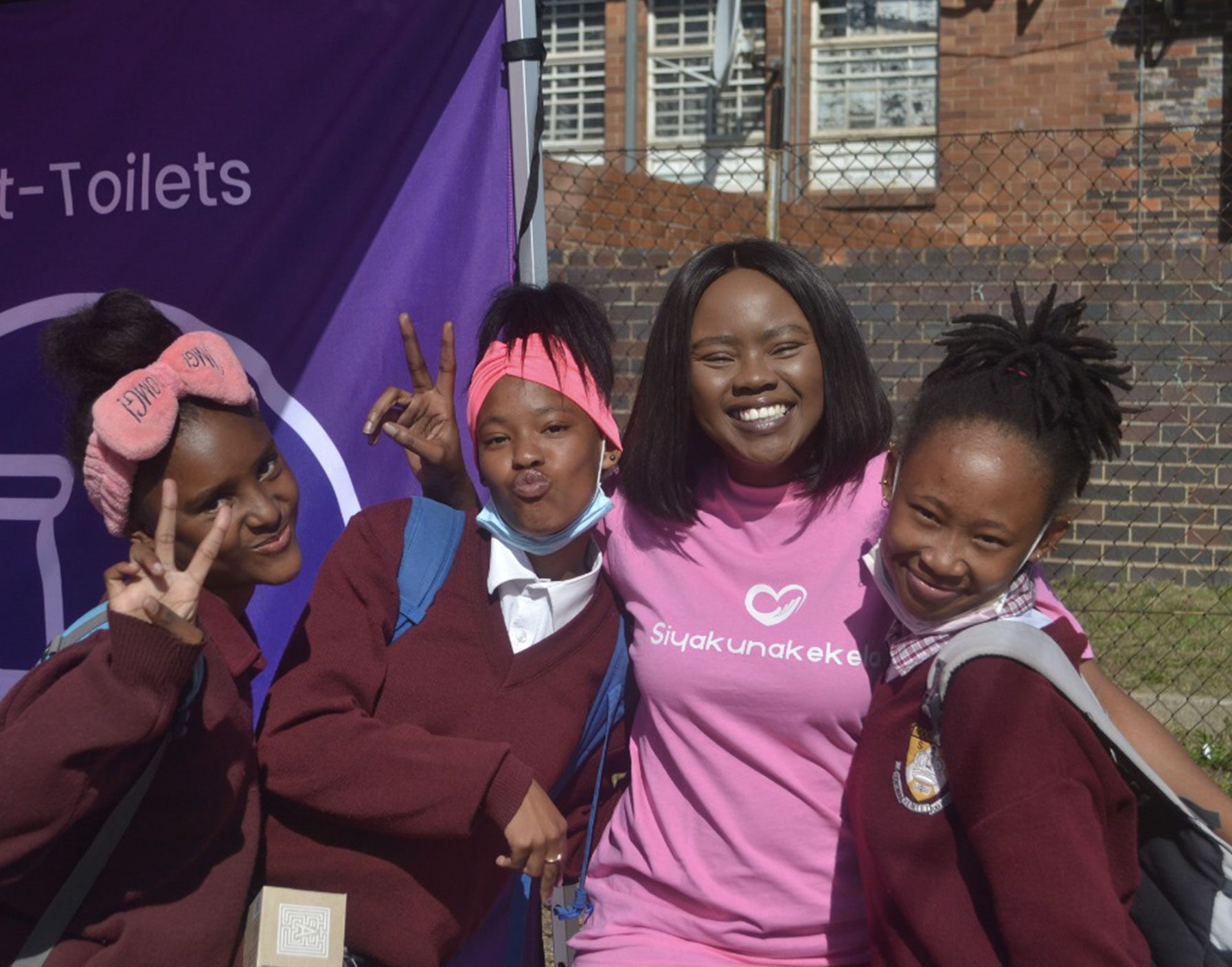
Social stigma, ridicule, loss of education—all challenges that burden young women as a result of period poverty. Ask any one of the 120 girls we’ve helped at Reagile Primary School in Thembisa, a township in South Africa.
But as much as we’ve helped them as individuals, the problem itself creates an even greater challenge for society—progression.
Let us not forget that the educated youth of today are the leaders of tomorrow. When you consider that those in period poverty lose up to 60 days of education a year—affecting millions of young women—you start to see how South African society as a whole loses out.
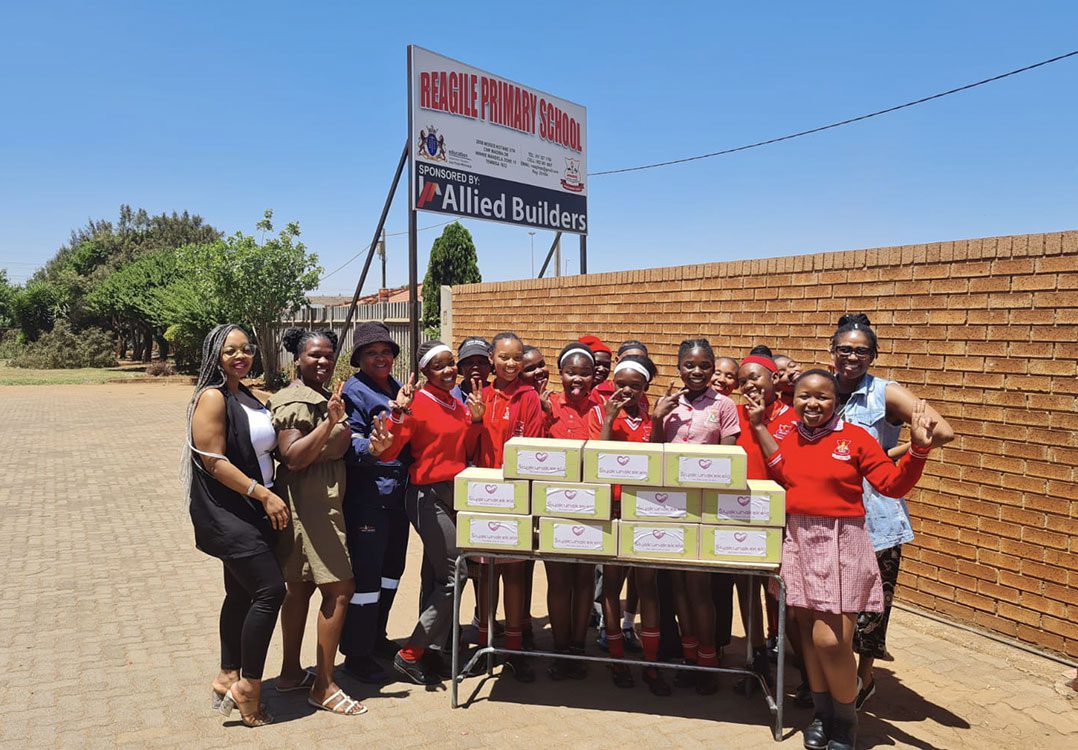
South Africa is a stunningly beautiful country. Its people are vibrant, positive, and strive to help one another. But much of this ambition is hindered by the reduction in education that period poverty brings.
Our commitment to eradicating period poverty isn’t just driven by our passion to help those young students; it’s also powered by our pursuit of a better South Africa—one that can hold its head up on the global stage and be counted. But we can only achieve this by addressing issues at a grassroots level.
Sadly, our government is failing its people in too many ways to mention here.
We need your help—not just for healthier, happier girls who are free from social stigma and unsanitary methods of managing their monthly cycles, but to build a better future for all South Africans. Please get involved with our cause and become instrumental in creating a better, genuinely more progressive world.

The goal is always the same: destroy period poverty in South Africa!
Yes, the name of the school does sound like a character out of a blockbuster sci-fi movie, but as much as we would like to make light of the work we do, we have no such privilege.
Megatong Primary School is the educational home to 332 young students.
Located in Mapetla Extension, Soweto, it faces more than its fair share of hardship, poverty, and social challenges—like many schools in the region.
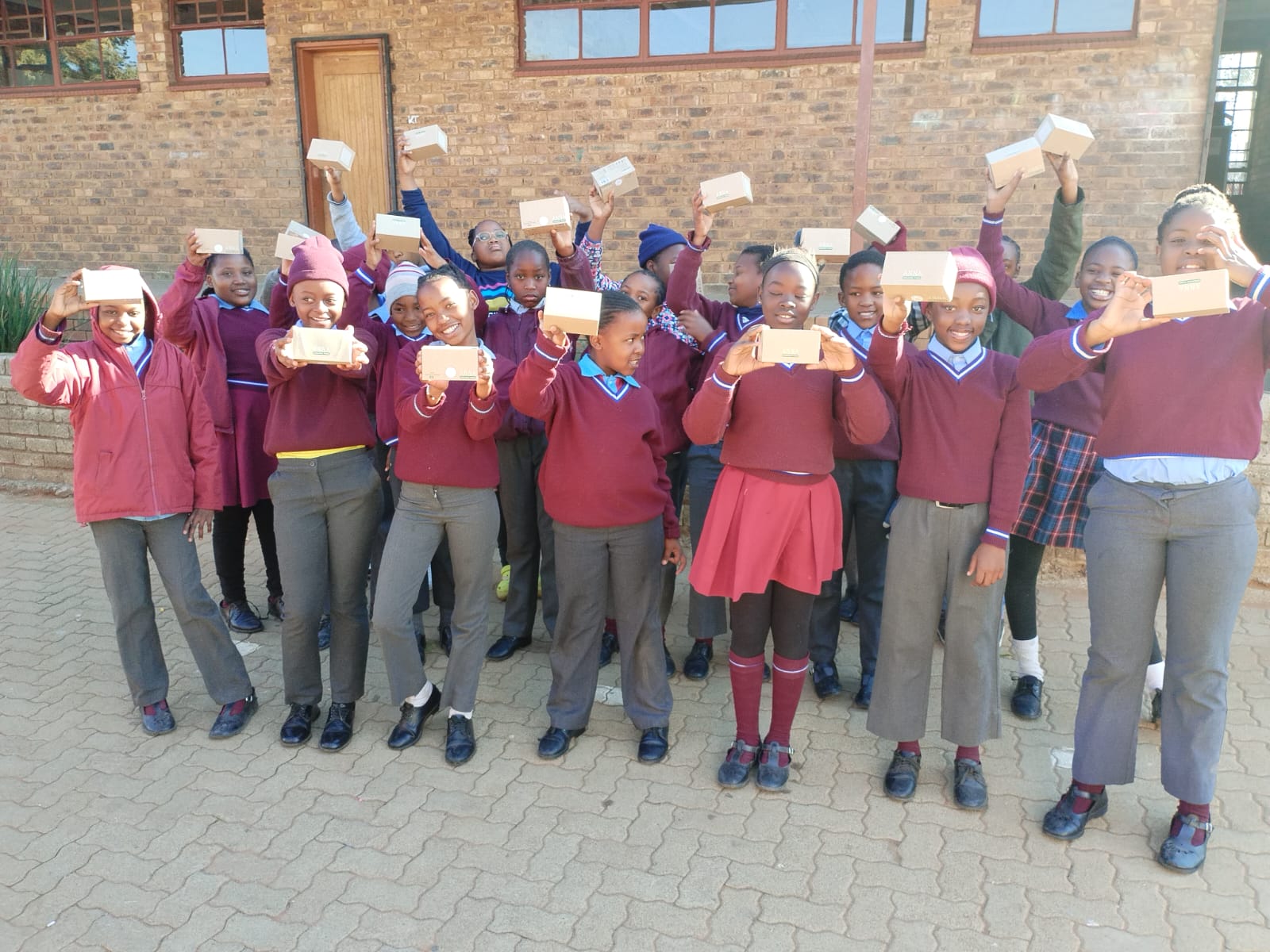
We became involved with this amazing hub of knowledge-hungry youngsters when we embarked on our initial outreach program in the Soweto region back in October 2022.
Once again, what we discovered shocked us: young girls were using anything from old socks to mud and grass to deal with their monthly cycle. And, many hadn’t even told their families for fear of punishment and ridicule.
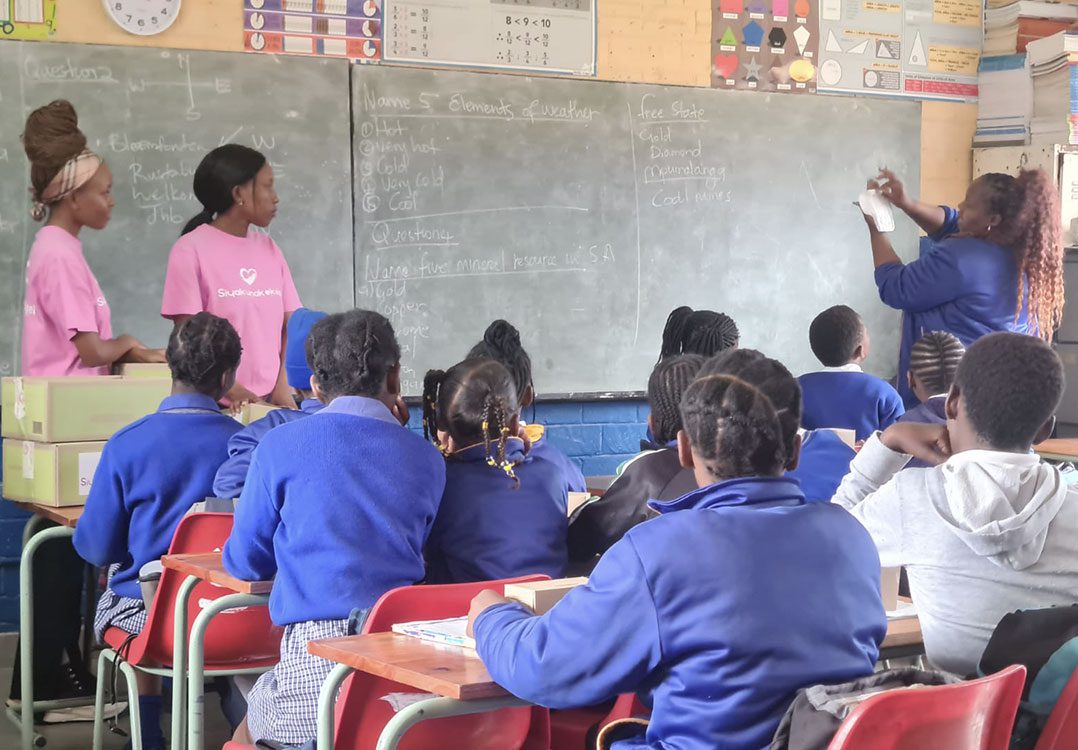
We hit the ground running, recruiting a network of delivery drivers, equipping them with our own brand of 100% cotton, biodegradable sanitary towels, and setting them to work on distribution.
It’s important for our potential donors to know that we don’t just stop at providing a few months’ supply of sanitary products. We ensure that these young girls have the products they need to manage their cycles for as long as necessary.
Good sanitary products are expensive and often hard to come by, as they are still seen merely as a luxury, not an essential part of a woman’s life.
Please take some time to read the many stories of how we’ve helped other schools in the Soweto region. Once you’ve done that, please consider donating. Remember: just £1 per month can help one child avoid the despicable social disadvantages of period poverty.
Our Manufacturers
Getting the right product was a major challenge. The product has to be biodegradable, free from any pollutants, and ideally manufactured in SA. After requesting tenders from various suppliers, we found V & G Personal Products (Pty) Ltd, an amazing manufacturer based in Cape Town. They are doing a wonderful job in producing and packaging the sanitary towels we send out.
Non-profit organisation number NPO: 289-861
Public Beneficiary Organisation number PBO: 930071093